Exceptional websites.
A distinctive presence, a clear story, and an effortless path from first impression to inquiry.
Imagination.Precision.Purpose.
An independent studio · Toledo, Ohio

Glass City Intelligence / Digital studio
A different perspective changes what’s possible.
Websites, brand systems, SEO, first-party analytics, and custom software.
Built, launched, and improved around your business.
Designed to stand apart.
Built to work beautifully.
We bring design, software, and clear thinking into one conversation. From the way your business looks online to the way its tools work together, every piece has a purpose.
Real client work / PC NET TECHS
For PC NET TECHS: brand reference, interactive business cards, desktop and mobile website design, Schema.org structured data, advanced SEO and PageSpeed work, first-party analytics, the Website Style Engine, a custom CMS and Builder, and PC NET DESK.
400+ GCI-reported iterations across the website, Core Console, and PC NET DESK; no downtime reported during that work.
Explore the PC NET TECHS Project01 / What we create
A distinctive presence, a clear story, and an effortless path from first impression to inquiry.
Custom tools and connected workflows that bring the right steps together and make everyday work easier.
Translate your identity into a coherent digital experience through typography, original imagery, and considered interaction.

Organize knowledge and research around the questions that matter. Keep sources visible and decisions in your hands.
That is only the starting point. We also build interactive 3D experiences, first-party analytics, custom content and style engines, research tools, and the deployment paths that bring them live.
See all Services02 / Complexity, brought into focus
Great digital work comes from bringing the details together. Explore the glass layers of our identity, then resolve them into something clear.
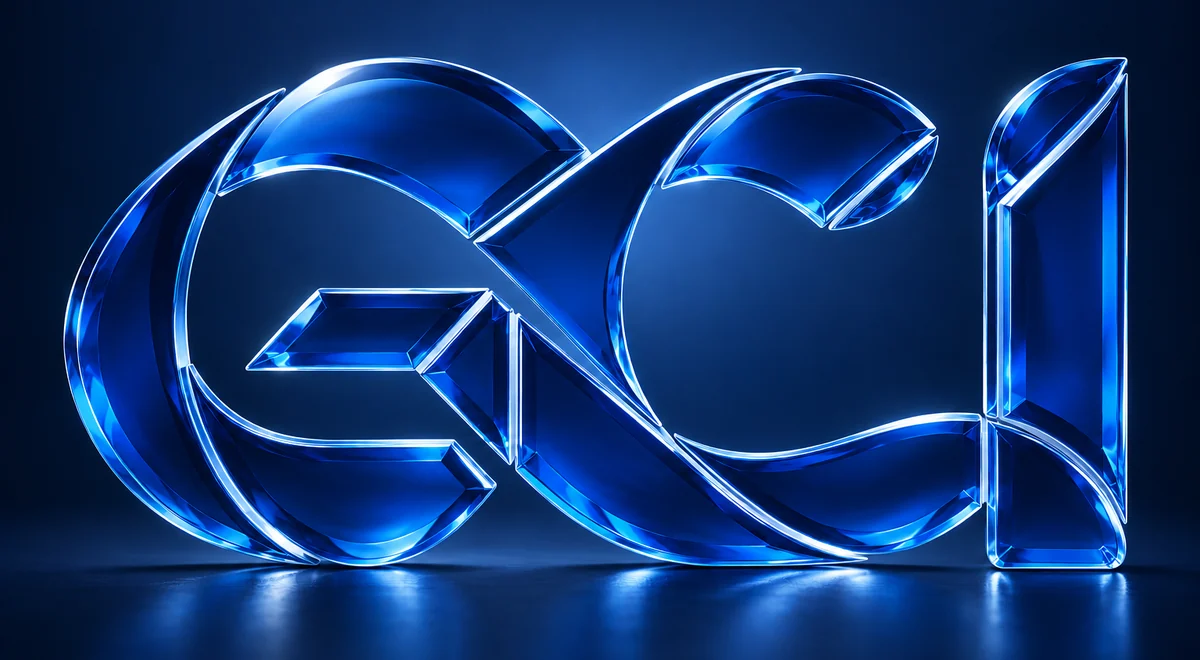
The interactive view is unavailable. You can still enjoy the original artwork.
An interactive study of the original GCI identity.
03 / Selected work
Explore three GCI concepts you can open and try. For the client work behind our broader capabilities, see the PC NET TECHS project above.
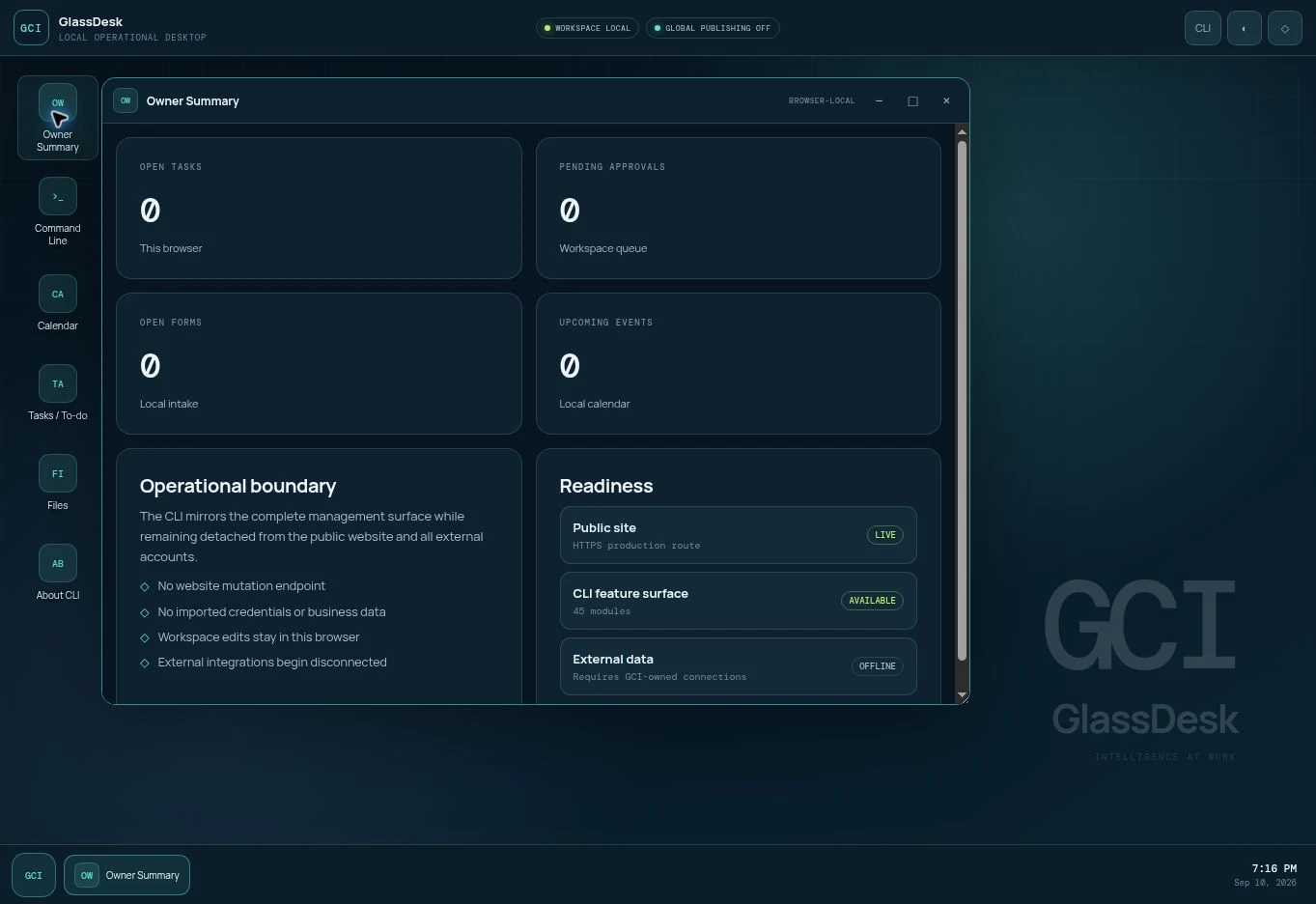 Actual interface
GCI product prototype
Tasks, notes, files, and approvals come together in a windowed desktop. Move between tools without losing the work in front of you.
Open Tasks from the desktop. On a computer, try moving a window; on a phone, open a tool in the dedicated full-screen view.
Browser-local prototype. Shares its workspace with CLI. External services are disconnected.
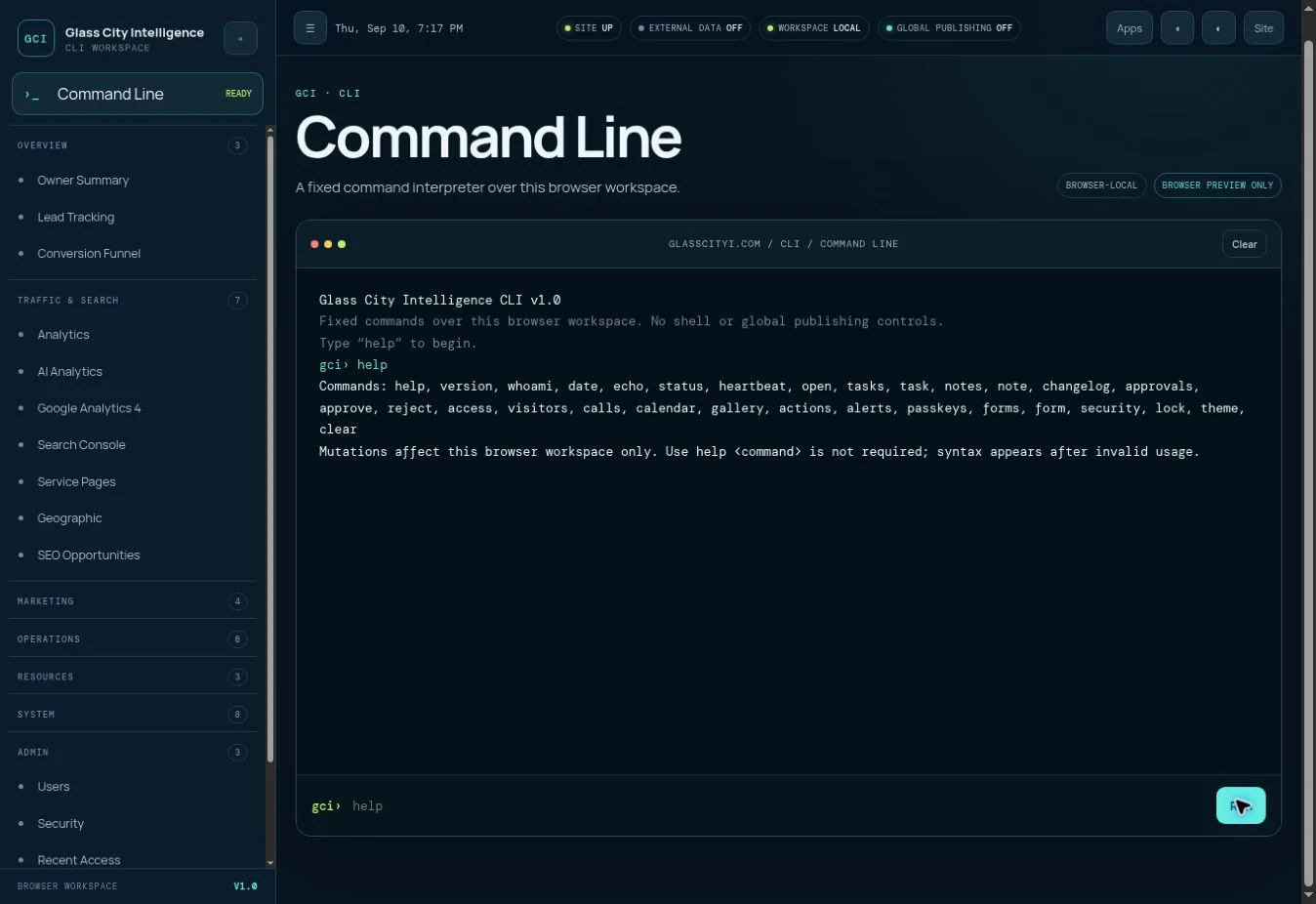 Actual interface
GCI product prototype
A command workspace for navigating tools and organizing everyday work. A different interface to the same underlying GlassDesk workspace.
Open Command Line to see supported commands, or choose a tool from the sidebar. Tasks and notes stay in this browser.
Browser-local prototype. Uses a fixed set of commands; it is not a connected AI assistant.
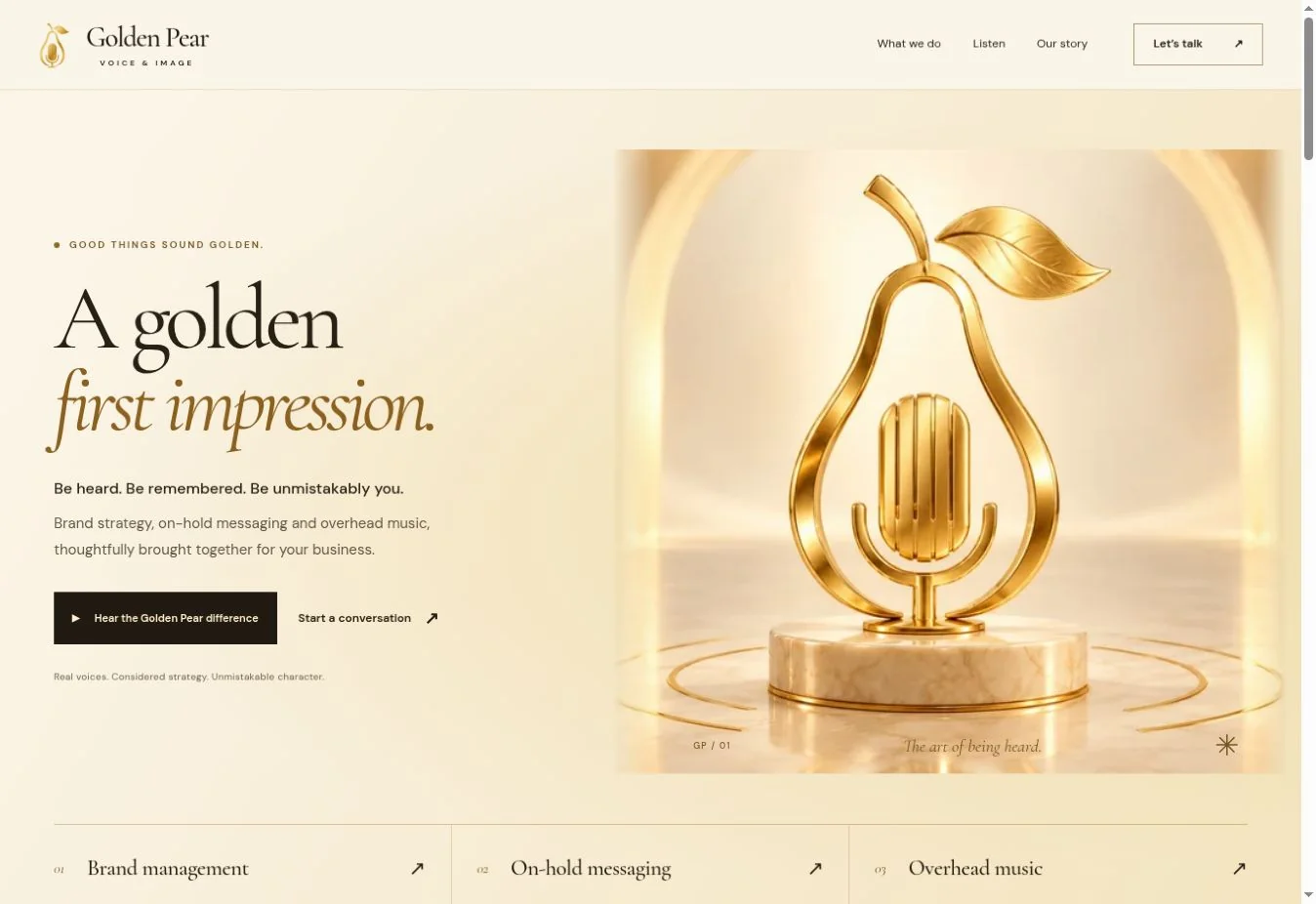 Actual interface
Website design concept
An expressive website concept for voice and image services, pairing a recognizable identity with original artwork and a guided inquiry.
Explore the voice and music presentation, then try the guided inquiry. Any email remains yours to review and send.
Design concept hosted by GCI. Presented as an example of the experience, without a claim of client results.
04 / The whole picture
Your website tells the story. Your software carries the work. Measurement helps you see what to improve. We design, release, and refine the relationship between all three.
Help people understand and take action.
Make the action useful behind the scenes.
Measure what happens. Improve what matters.

Ambition needs a clear way forward.
05 / From possibility to reality
Understand your audience, your goal, and what needs to change. Agree on the scope, responsibilities, and quote.
Review the design and a working version. See the choices in context and give feedback while it can shape the result.
Check the important journeys, resolve the details, and make ownership and the next steps clear.
Independent by design / Toledo, Ohio
GCI is a founder-led studio. You work directly with the person designing and building your project, from the first conversation to the final details.
About Dan & GCIFind your starting point
Choose the challenge closest to yours.
Your next idea belongs here.
Bring the ambition.
We’ll help you shape what comes next.